

Why Your "Dark" Preset Still Sounds Safe
3 Min Read
Featured
Obscura Dark Synthesis, curated with composer René G Boscio, is built around the exact moves this post breaks down — explore it at sonalsystem.com.
Open ten "dark" preset banks and you'll find the same recipe nine times: minor key, a slow attack, a wash of reverb, maybe a low-pass filter rolled halfway down. It's a real sound — moody, cinematic-adjacent, perfectly usable as a bed under dialogue. But it isn't tense. It's just quiet and minor, which is a different thing entirely.
At a Glance
- A minor triad is stable and resolves — real dissonance is intervals that refuse to resolve.
- A static filter just dulls a sound. A resonant filter moving irregularly makes it feel alive.
- Uniform soft attacks read as smooth, not scary — unpredictable sharp transients break the pattern.

Dissonance, not key signature, is what turns moody into menacing.
Dissonance, Not Just Minor
A minor triad is stable — it resolves, it sits, it's consonant even though it's sad. Real dissonance means intervals that don't want to resolve: a minor second, a tritone, a cluster of adjacent semitones stacked instead of spread across an octave. Swap one note in a standard minor pad for its neighbor a half-step away and the chord stops being sad and starts being wrong.
Resonance as a Living Thing
A static low-pass filter just makes a sound duller — it doesn't make it scarier. What creates tension is a resonant filter with the cutoff and resonance both in motion, slow and irregular rather than a clean LFO sweep. The filter should sound like it's searching, not cycling.
"The tension is engineered into the sound design itself — not added afterward with reverb."
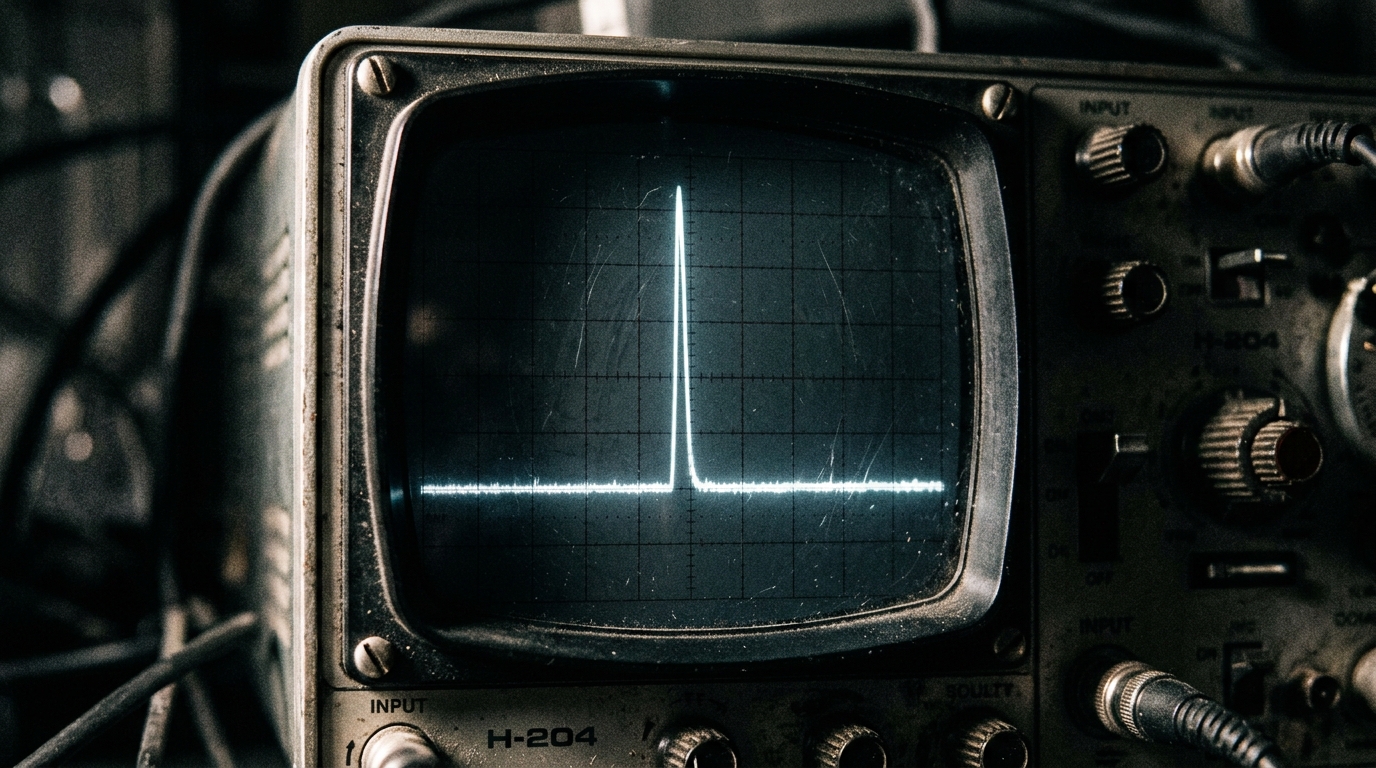
Transients that don't behave uniformly are what keep a listener from settling in.
Transients That Don't Behave
Most dark presets soften every attack uniformly, which produces something smooth and vaguely ominous but never actually startling. Real unease needs inconsistency: mostly soft, slow-attack material with the occasional sharp, unprocessed transient breaking through unpredictably.
The Preset That Actually Does This
This is the gap the Obscura Dark Synthesis Sample Pack was built to close — René G Boscio designed it around aggressive leads, distorted drones, and cinematic pulses specifically because a static minor pad with reverb doesn't hold up under film, TV, or industrial-scoring scrutiny. The tension is engineered into the sound design itself: dissonant intervals, filters with real movement, transients that don't smooth out into predictability.
Before calling a sound "dark," run three checks: is there a genuinely dissonant interval somewhere in the harmony, not just a minor key. Is the filter moving irregularly, not just rolled off and left there. Does at least one element have an attack that breaks the pattern instead of matching everything else's soft entrance. If the answer to all three is no, the patch is moody — not threatening.